Language Use in SimCity 4
As the SimCity 4 is all about managing the various forms of feedback delivered by the mechanisms of it's underlying model it is useful to take a look at how it communicates the outcome of it's simulation to the player. Lauwaert identifies seven means of providing feedback (Lauwaert 207), of those we have already seen the individial data sets, RCI demand meter and the monthly budget screen on the previous page. The others are as follows:
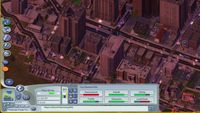
City opinion polls, which aggregate the values of relevant individual data sets according to the appropriate topic.
And data graphs which show how certain aspects of the city developed over time.
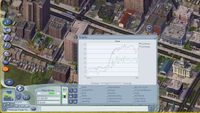
While these don't necessarily qualify as use of language in the strict sense, they do still represent acts of communication and transport information about the otherwise not readily available abstract information and outcomes of SimCity's algorithms to the user and can therefore influence the way the user engages with the product.
The last methods identified to communicate feedback are an expandable news ticker and the board of seven city advisors, a feature carried over from it's predecessor SimCity 3000. It should be noted that the newsticker simply gathers all messages of the advisors (along with a couple of nondescript fluff messages, as indicated by a point, instead of a short arrow in the list) inside a single dropdown menu so both features ultimately present the same snippets of text.

It is interesting to note that advisor messages are color-coded by the game. Green coloration indicates feedback the game connotates as positive, such as succesfully growing or attracting business and industry, as seen in the screenshot below, while red coloration indicates a problem, in which case the message also offers a link to open the appropriate graph or data view to help illustrate the issue, or to proposals to adress the issue, such as to a specific building or budget slider. Grey headlines usually refer to texts offering general advice regarding certain topics.
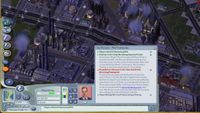
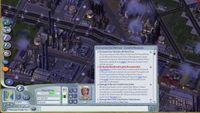
It should be noted that the advisors have, according to their supposed area of expertise, their own view on issues that, on a surface level, might go against SimCity's economic model but ultimately end up reinforcing it in the end. In the above example, parks and trees do (very slightly) reduce air pollution, but they do have an effect on their surroundings by increasing landvalue and therefore desireability, balancing out the negative effect of industry on nearby residential zones.

Should an issue go unaddressed for so long that a function of the city is threatened the appropriate advisor will chime in with a pop-up message, interrupting gameplay and bringing attention to the problem. In the above case action is urged in the face of an water pump reaching capacity but similar messages exist for all possible outcomes, such as running out of money or a street reaching capacity.
this constant feedback
loop is a way of shaping and forming how the player plays the game. For example,
windows with commands and tips from the city advisors will pop up that you simply
cannot ignore. [...] It is only when [...] when you know how to juggle the variables in just the right way, when you
have, in other words, internalized the intended practices of play, that you can try and
play with the feedback toolbar collapsed. (Lauwaert 207)
As Lauwaert writes, advisors fill a special role in SimCity's communication economy with the player as they are the only form of feedback that actively disrupts the immediate gameplay loop to address issues in play that the game considers adverse outcomes. The messages themselves are not dynamically generated but the context
The language employed by all advisors is always very playful and stylized, containing metaphers, rethorical questions but always remaining informative and instructive in regard to the addressed topic. The language is very much geared towards instructing and informing the user of emerging issues and ways to address them, next to offering general advice about the game's mechanics. Should
As the game's narrative fiction emerges out of it's algorithm crunching player input the game's use of language is not necessarily geared towards the represention of any notion of community in it's characters, outside of perhaps that of a managerial city administrators portrayed in a satirical manner, but even then the register employed by the characters is too casual to give this depiction any semblance of authority. However the game effectively deploys graphical means of communication and didactic language use to direct the player towards a better understanding of the inputs needed to produce positive outcomes in accordance with it's socioeconomic mechanics.
The game's language usage might not transcend the immediate concerns of it's simulation but rather develops an utilitarian and didactic relationship with the user that might meaningfully impact register and language use in social networks formed by and for people familiar with the game, such as online fan communities.